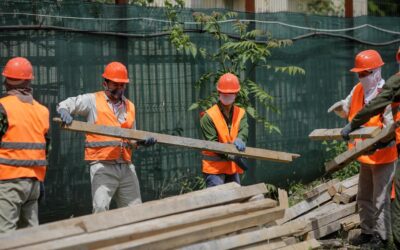
With the Romanian authorities in New Delhi overwhelmed by the large number of applications for work visas for workers from Nepal, Sri Lanka and India, the solution comes from the Philippines, which is currently the fastest source of labor for Romania.
With the increase in the quota of foreign workers with the right to work in Romania to 100,000, companies recruiting foreign labor face a new challenge. These are Considerable increase in the waiting time for Romanian authorities to grant work visas for foreign workers.
Thus, an operation that would normally it only required a waiting time of 3 months, it has now reached up to 8 monthsup to the possibility for Romanian companies to welcome foreign staff.
"There is a growing interest both from Romanian employers for workers from the Philippines and from the latter for our country. I attended dozens of job interviews these days and I can safely say that the Philippine workforce is the best in every respect and that's my experience of over 12 years in the field. These people are hard-working, well-educated, good English speakers and have almost 40 years of experience of working abroad.
Of course, for this premium category of staff, the prices are higher, but Romanian employers have understood the importance of a safe and quality workforce", said Yosef Gavriel Peisakh, General Manager Work From Asia, who recently returned from the Philippines, where he had a series of official meetings with representatives of Romanian authorities in the country and with several companies.
Among the factors that contribute to the premium status of this segment of the workforce are the protection offered by the Philippine state to the worker, the proper regulation and permanent monitoring of the employee, which from the outset is a guarantee for both the employer and the provider.
"Most workers from Asia see Romania as a transit destination to Europe and its more developed countries, which is why it has even developed an alarming visa shopping market. This is not the case for the Filipino labor force, which comes to Romania strictly to work", concluded Yosef Gavriel Peisakh.