Ever wondered what a day in the life of a Filipina nanny in Romania is like? What pushes her to leave her family and how she feels about being a nanny?
Mylene exclusively answered our questions and helped us understand what makes Filipino nannies so special and why more and more parents are turning to Asian nannies, much to the chagrin or delight of their grandparents.
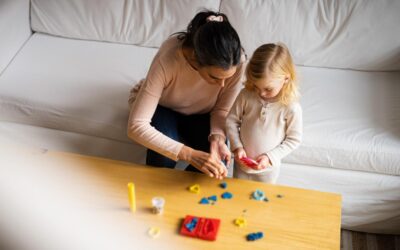
Mylene Caradang is 42 years old, from the province of Laguna, Philippines, is married with no children. Perhaps that's why it was easier for her to leave her homeland to work as a nanny in a foreign country. She already has experience in this field and shared with us exactly what she does when she's at work and how she connects with the little ones. "I can tell you that I provide cooking for the children, I help them with all the necessary preparations for school, I even teach them to read. Usually, when you spend a lot of time in the company of children, it's easy to build a connection with them, because you do what they like: you play with them, read to them, feed them or bathe them," Mylene told us. How do children adjust to babysitters and, just as importantly, how do they get used to the little ones? Mylene reveals a few secrets: "First of all, you have to know their likes and dislikes, and the best example is food. When you don't know a dish, you learn to cook it. You also have to be patient, because children often have tantrums. In my experience with Arab employers, for example, the parents are more aggressive, but even then the children are still adorable. The nannies take into account what the children want, but always with limits, because it's about the children and they don't always know what's good for them.
How long does it take to settle in
We wondered how long it takes a Filipina nanny to adjust to new conditions, to get used to her new family and whether her parents are helping her to settle in. Working hours are not the usual 8am to 8pm, and after work, nannies keep in touch with their families via video calls. Their employers (families) provide room and board, so most of the money they earn goes to their loved ones in the Philippines. Going back to the settling-in period, for Mylene, for example, the starting period lasts about a month. The most important thing is that she knows her schedule and, more importantly, what her family's expectations of her are. "It should be very clear what my responsibilities are. It's also during this time that I find out the children's culinary preferences and how regularly they are allowed to have a certain type of food. What's more, because I come from Asia, I need to know if they want to include this kind of food on the menu. Usually, in about a month, all these details are very clear to everyone," she explained.
Looks after children and 3 cats
From the moment everything is settled, she, the children and the parents get on very well, because trust is already built up and everyone gets on with what they have to do: "We don't have time to interact very much because employers don't usually spend much time at home. I'm really lucky because I have a generous employer here in Romania, who even brought my husband here with me," Mylene told us.
She is currently working for a family in Romania with big kids and cats, so she's got work to do, no kidding! She does just about everything, ironing clothes, cooking, cleaning and looking after the family's three cats. Nannies also usually go on vacation with families with young children. In Mylene's case, the children are older, around 10 years old. "The little children I take care of here are the cats (laughs)," says the friendly Filipina nanny.
Why she got jewelry from a child's father
We asked her if she was attached to the children she looked after and if she made special memories with them, and Mylene surprised us with her statement. "All the children I have looked after are special to me. I even miss the Arab ones. It's normal for a Filipino woman to treat her children as if they were her own, I think that's what makes us so special. A fond memory is from Dubai and the moment when my employer gave me jewelry at the request of his child, who, after seeing his mother wearing jewelry, wanted to make sure that I got some. I was very touched by this moment, because with this gesture Ismail showed me how much he cares for me and that he actually sees me as a mother.
Differences in mentality, habits, education
We couldn't help but wonder if there are major differences in the lifestyle of Romanians as opposed to Filipinos. Here's Mylene's answer: "I don't think there are very big differences, but there are some. For example, the food is very different. So is the time of day when children are bathed. Here, in Romania and in the United Arab Emirates, this happens in the evening, whereas in the Philippines it happens in the morning. In terms of mentality, parents in Romania are more protective when it comes to their children, which is a good thing, because it ensures that little ones are always safe. Americans are more modern and leave children completely in the care of the staff in charge. In Romania, on the other hand, mothers call several times a day to make sure that everything is okay with their children. That doesn't happen in America," the nanny explained.
Mylene Caradang came to Romania through the recruitment agency Bona de Nota 10, which has been bringing staff (nannies and maids) from the Philippines, Indonesia, Sri Lanka and Nepal since 2010.